
Orthopedics · Foot and ankle
Achilles tendon treatment
Does your tendon above the heel or the back of the heel hurt, is it stiff in the morning, and is the tendon thicker than it used to be? Treatment without surgery helps most people, above all properly guided exercise. If it does not work even after half a year, surgery removes the damaged tendon tissue and, if necessary, reconstructs the tendon. If everything is in order, the procedure can take place as soon as within a week of the consultation.
- No referral from a general practitioner needed
- Surgery by Prof. MUDr. Radek Hart
Procedure under general or regional anesthesia
- treatment starts
- without surgerybrings enough relief in most cases
- surgery considered
- 6 monthsonly when the pain does not subside even after this treatment
- until the procedure
- 1 weekfrom the consultation, if everything is in order
- walking in a brace
- 2 weekswithin this time after surgery most patients may start walking in a brace or cast
01When a procedure is considered
Pain, stiffness and a thickened tendon
The Achilles tendon connects the calf muscles to the heel bone. With long-term overload the fibers of the tendon break down, tiny tears form in them, and the tendon swells and thickens. The problems can be in the middle part of the tendon above the heel, or at its insertion on the heel bone, where a bone spur often grows. The location matters; the exercises and the type of surgery are chosen accordingly.
-
Stiff and sore in the morning
Pain and stiffness along the tendon after waking up, strong pain the day after sport and swelling that gets worse during the day or under load.
-
Thickening and a spur on the heel
The tendon feels thicker to the touch. With problems at the insertion, the back of the heel hurts, often in shoes, and a bone spur forms on the heel. Damaged fibers can also calcify over time.
-
Treatment without surgery does not work
Surgery comes into question only when the pain does not improve even after 6 months of treatment without surgery. The type of procedure is then determined by the location of the problem and how large a part of the tendon the damage affects.
-
Who is at higher risk
Mainly runners and people who suddenly increase the volume or intensity of training, change footwear or have tight calf muscles. Problems at the insertion occur at any age and with any activity.
- Achilles tendon
- calf muscle
- bones
- skin and soft tissue
02Treatment
First without surgery, if that is enough
In most cases treatment without surgery is enough. Marked improvement, however, often comes only after several months, and even with early treatment the pain can last longer than 3 months. Which approach is right for you is decided by the doctor at the consultation.
Step 1
Relieving the tendon
At home, without a procedure.
- Replace running and jumping with cycling, an elliptical trainer or swimming
- Ice on the most painful spot for 20 minutes at most, sooner if the skin goes numb
- Pain and anti-inflammatory medication for one month at most without consulting a doctor; it does not reduce the thickening of the tendon
- For severe pain, a brace or immobilizing boot for a short time; wearing it for long weakens the calf
Step 2
Exercises with a physiotherapist
The basis of treatment, depending on the location of the problem.
- Stretching the calf, only as far as the tendon does not hurt
- Middle part of the tendon: eccentric exercises, slowly lowering the heel off the edge of a stair; first under the guidance of a physiotherapist
- Insertion at the heel: no exercises over the edge of a stair; softer shoes, shoes open at the heel and heel lifts help
- A night splint that holds the toes up eases the morning pain
Step 3
Surgery
When treatment without surgery does not work.
- Pain does not improve even after 6 months of treatment without surgery
- The tendon is clearly damaged or the insertion with a bone spur hurts
- An older tendon rupture that has not healed
Not sure whether the middle part of the tendon or the insertion at the heel hurts? The examination and ultrasound will decide. Book a consultation
03How the procedure works
From booking to getting home
The type of surgery depends on where the problems are and how large a part of the tendon they affect. The damaged tendon tissue is removed, with problems at the insertion also the bone spur on the heel, and the tendon is re-anchored to the heel bone if necessary. When a large part of the tendon is damaged, it is reinforced by transferring another tendon from the foot, most often the big toe flexor; the big toe still moves afterward. Sometimes a tight calf muscle that overloads the tendon is lengthened. Which procedure you need is explained by the doctor based on the examination and magnetic resonance imaging.
-
Booking
Online or by phone. A referral from a general practitioner is not required.
online or phone -
Consultation and examination
Prof. Hart examines the tendon, the heel and the movement in the ankle. An X-ray shows spurs on the heel or calcification in the tendon, ultrasound the condition of the tendon. Before surgery, magnetic resonance imaging helps with planning.
diagnosis and treatment plan -
Procedure
Under general or regional anesthesia. The extent of the procedure depends on how large a part of the tendon is damaged.
as soon as within a week -
Home
You go home as soon as everything is in order, with the foot in a brace or cast. When and how you may put weight on it is decided by the doctor according to the extent of the procedure.
check-ups and physiotherapy
04Recovery and physiotherapy
The tendon heals slowly
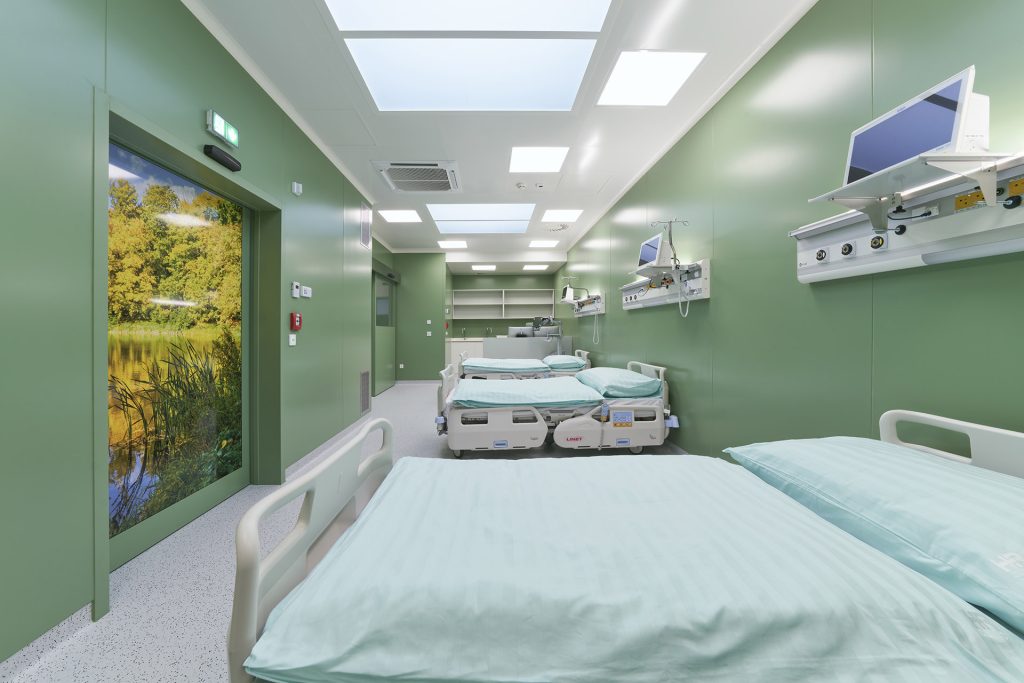
Physiotherapy is an important part of treatment. The larger the part of the tendon that was damaged, the longer the recovery and the smaller the chance of returning to sport. If needed, we follow on with physiotherapy right at the clinic.
-
Walking in a brace within 2 weeks
After the damaged tissue is removed and the tendon is anchored, most patients may walk in a removable brace or cast within 2 weeks. Exactly when depends on the extent of the damage.
-
Gradual return of strength
Exercises with a physiotherapist gradually restore strength to the calf and movement to the ankle. How fast this goes depends mainly on how large a part of the tendon was damaged.
-
Results and risks
The results of surgery are usually very good. In 20 to 30% of those operated on, however, the pain persists, and if the wound becomes infected it is hard to treat in this location.

05Who operates
Prof. MUDr. Radek Hart, Ph.D., FRCS, MHA
Orthopedic and trauma surgeon of the musculoskeletal system, head physician of HR Clinic. At a clinic in Vienna he is head of the foot outpatient clinic. He sees patients in Znojmo and in Vienna; after a consultation in Vienna the procedure can be performed in Znojmo.
More about Prof. Hart Specialist website ortho-hart.at
Price We will tell you the price of the procedure at the consultation, depending on the findings and the extent of the procedure.
06Common questions
What patients ask most often
Related procedures
Flatfoot in adults Unstable ankle after a sprain Ankle arthritis Bunion and forefootRelated articles
Achilles tendon pain: causes and when to see a doctorDo shockwave therapy or injections help?
According to studies, shockwave therapy improves pain and function of the tendon, especially together with eccentric exercises, and complications are rare; for routine use, however, more evidence is needed. A corticosteroid is not injected into or around the Achilles tendon because it increases the risk of rupture. Platelet-rich plasma (PRP) is a method under study; its benefit has not yet been confirmed.
Can I do sports with a sore tendon?
Running and jumping put the most strain on the tendon. While it hurts, it is better to replace them with cycling, an elliptical trainer or swimming. You stay active and the tendon gets to rest.
What if the tendon ruptures?
If you suspect a ruptured tendon, go straight to a trauma outpatient department or emergency room. A rupture is treated by immobilization in a brace or cast, or by surgery; if surgery is needed, it is better to do it soon after the injury, because the tendon shortens and scars over time. After the first treatment you can book with us for a follow-up, further treatment or a second opinion.
Will the surgery hurt?
You feel nothing during the procedure. Under general anesthesia you sleep; regional anesthesia numbs the part of the body being operated on. After the procedure, medication eases pain and keeping the foot elevated helps.
How long will I stay at the clinic?
You go home as soon as everything is in order. The stay at the clinic lasts 24 hours at most.
Do I need a referral from a general practitioner?
No. It is enough to book online or by phone.
How soon can I have the procedure?
If everything is in order, the procedure can take place as soon as within a week of the consultation. We arrange the date according to the result of the examination.
07Booking
Book an orthopedic consultation
Online or by phone, at the clinic in Znojmo. A referral from a general practitioner is not required.
- +420 515 225 520
- info@webdemo.dam-medizin.com
- Kotkova 3974/9c, 669 02 ZnojmoMon: 8:30–15:00 · Tue–Fri: by appointment